Pues le toca al gráfico habitual sobre las entregas de buques y submarinos para la Armada Rusa en el pasado 2025.
Por ahora cito esos. Es probable que se conozca alguno más con el paso del tiempo porque si atendemos a las informaciones oficiales faltarían algunos buques por citar.
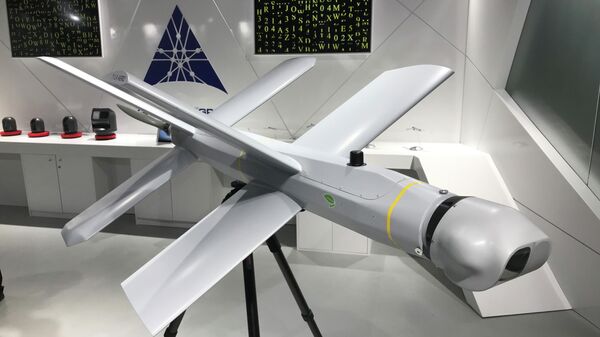
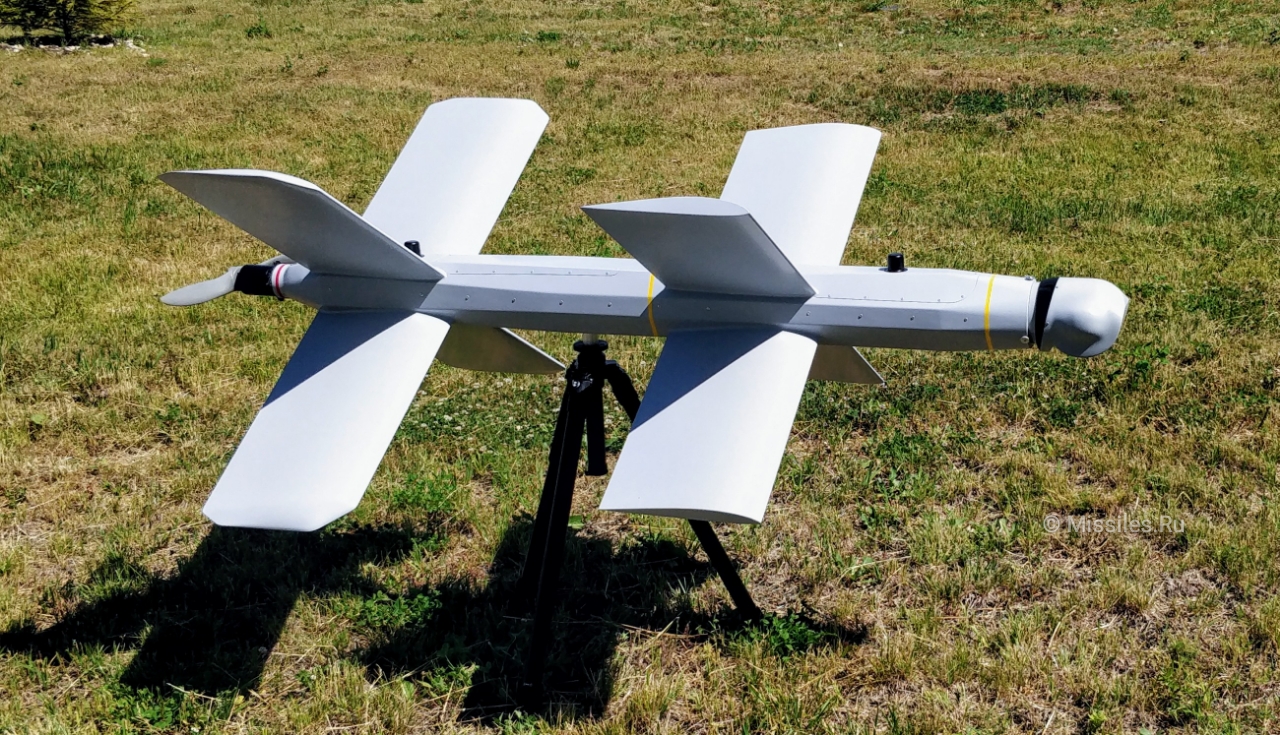
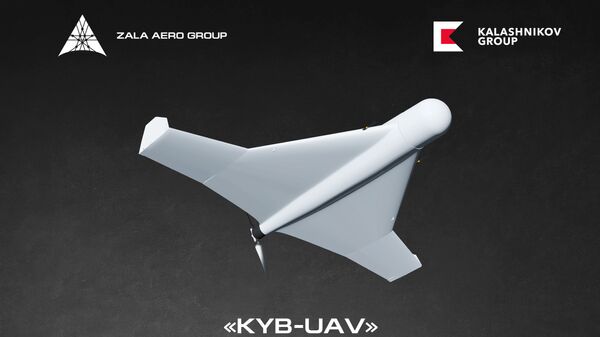
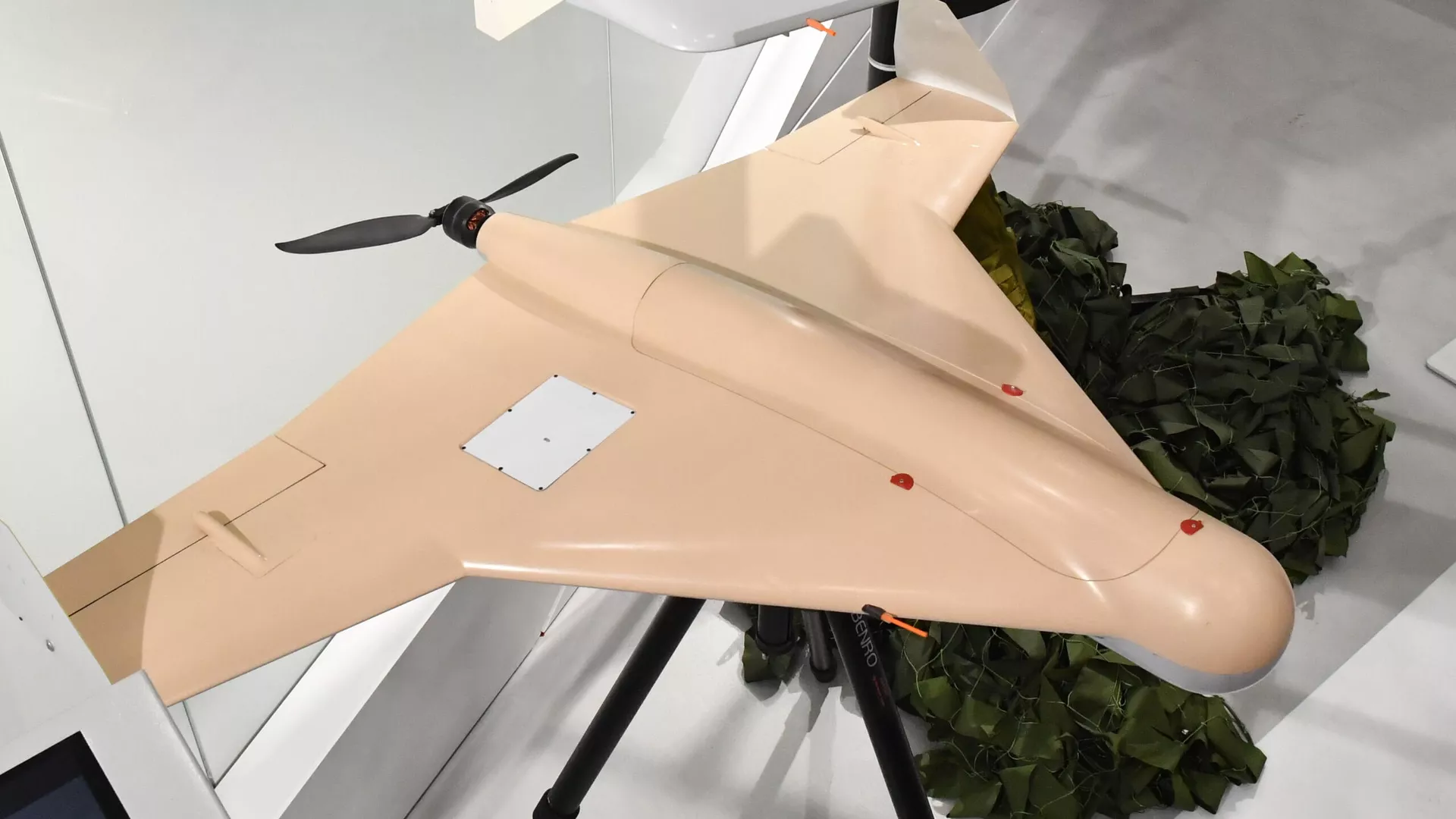
Kalashnikov ofrece en su amplio catálogo una serie de drones de ataque (Kamikazes) que darán qué hablar en los próximos años y como son producto estrella toca reunirlos para que sea más fácil identificarlos.
En Army2019 Kalashnikov presentó su nuevo drone-kamikaze ZALA 'Lantset'...
Por la presentación de Kalashnikov, al menos habrá dos versiones del Lantset...
Hablamos de:
Lantset 1, el hermano menor, con una velocidad entre 80 a 110 km/h y una autonomía de 30 minutos. O sea, unos 47 km a velocidad media. Su carga será de 1 kg y su peso máximo al despegue de 5 kgs.
Lantset 3, el hermano mayor, con una velocidad entre 80 a 110 km/h y una autonomía de 40 minutos. O sea, unos 63 kms a velocidad media. Su carga será de 3 kg y su peso máximo al despegue de 12 kgs.
Quizá haya que preguntarse si habrá un Lantset 2.
El vídeo promocional los muestra atacando diversos blancos, uno de ellos en movimiento.
Las características conocidas del drone-kamikaze 'KUB' son:
dimensiones 1.210 x 950 x 165 mm
cabeza de combate 3 kgs
velocidad entre 80 a 130 km/h
autonomía 30 minutos.
Con estos datos podemos añadir algo más sobre la precisión mostrada en el vídeo:
En base a las dimensiones del drone en la toma que podemos comparar la conclusión es que el 'KUB' impacta a unos 1,7 m del blanco. Algo que le puede convertir en un medio ofensivo muy eficaz -pese a tener una cabeza de combate de 3 kgs- contra blancos poco protegidos.
También es a destacar el ángulo con el que enfrenta los blancos, muy elevado, casi en la vertical.
Desde EEUU le echan flores al nuevo drone-kamikaze de Kalashnikov...
Según anuncia Chemenov, de la Corporación Rostec, los drones de combate de Concern Kalashnikov (seguramente en referencia a estos drones-kamikaze) han sido probados con éxito en Siria...
La gracia del Sarmat es que hablamos de un misil estratégico de tal magnitud que podrá cargar cualquier tipo de solución de ataque y colocarla en la otra punta del planeta no sólo utilizando la trayectoria directa más corta sino pudiendo utilizar otras que no están al alcance de otros misiles precisamente por falta de prestaciones o capacidades.
Secuencia de la prueba de eyección del misil 'Sarmat':
La eyección en los sistemas estratégicos rusos es fundamental porque utilizan el lanzamiento en frío, o sea, que el misil no enciende sus motores dentro del silo sino que es eyectado por un sistema "piroténico" y cuando ha sido expulsado y ha ganado altura enciende sus motores.
Se especula que el Sarmat podría colocar en la otra punta del planeta unos 40 RVs (vehículos de reentrada) incluso utilizando trayectorias a través del polo sur ( enlace ) ...
Más "holgura" a la hora de colocar lo que sea que haya que colocar en la otra punta del planeta permite que la solución de ataque terminal pueda manejarse con volúmenes y pesos mayores. Por ejemplo:
O ayudas a la penetración de los RVs; como señuelos o perturbadores o etc.
El poder desarrollar la trayectoria a través del polo Sur se traduciría en que los tiempos en los que los medios ABM (antimisiles balísticos) del enemigo podrían monitorizar tus lanzamientos se reduciría considerablemente, lo que significaría que las posibilidades de interceptar los misiles también se reducirían.
Lo que se viene comentando hace tiempo, el Sarmat disfruta de tales capacidades que podrá ser capaz de llevar a cabo diferentes trayectorias, lo que complicaría las cosas a las defensas abm...
Otra de las plataformas que podrá utilizar el drone 'Poseidón' será la modificación del proyecto 949A, el proyecto 09852 ...
La cantidad de 32 drones 'Poseidón' que se citan sale de desplegar 2 plataformas en la flota del pacífico y otras 2 en la flota del Norte. Cada una con capacidad para 8 drones 'Poseidón'. 16 por flota.
Se completó la fase clave de pruebas del 'Poseidón' ...
C. The Russian Federation
By contrast, there are reasons to be concerned about
the conformity of Russian nuclear policy with wellestablished international legal rules and principles.
President Vladimir Putin's June 2020 declaration of
nuclear weapons policy speaks in general terms, for the
most part unproblematically, about the importance of
nuclear deterrence, and declares that Russia
"reserves the right to use nuclear weapons in
response to the use of nuclear and other types of
weapons of mass destruction against it and/or its
allies, as well as in the event of aggression against
the Russian Federation with the use of
conventional weapons when the very existence of
the state is in jeopardy."
Russia argues that its doctrine conforms with
international law, that it has nuclear weapons only for
defensive and deterrent purposes, and that they would
only be in extremis, and one hopes that this is indeed the
case.
Worryingly, however, Putin's guidance specifies that
one "possibility of nuclear weapons use by the Russian
Federation" is upon "arrival of reliable data on a launch of
ballistic missiles attacking the territory of the Russian
Federation and/or its allies" - apparently irrespective of
the circumstances of such attack (e.g., whether or not the
missiles are armed with conventional or nuclear
warheads, or whether the "territory" in question is
inhabited by anyone). This explicit heedlessness to
circumstance is apparently not an accident of phrasing,
but is the very point: as two senior officers from the
Russian General Staff recently reemphasized in the official
military newspaper Krasnaya Zvezda, "[a]ny attacking
missile will be perceived as carrying a nuclear warhead."
Especially coming from a country that itself possesses
a very large arsenal of ballistic missiles that are capable of
carrying either conventional or nuclear warheads, it is not
obvious - to say the least - how such a threat of nuclear
use in response to any missile attack would always be
consistent with thejus ad bel/um requirements of
necessity and proportionality. One should certainly be
careful not to draw firm conclusions about doctrine from
press commentary, but more clarity and transparency on
such issues is essential, for these points raise potentially
troubling questions.
Another disturbing sign comes with Russia's
development of the Poseidon nuclear-powered
underwater drones that it apparently intends to fit with
multi-megaton nuclear warheads and launch across the
ocean in wartime in order to inundate U.S. coastal cities
with radioactive tsunamis. The very operational concept
of the Poseidon - involving an enormously destructive
warhead dispatched without possibily of recall on a transoceanic passage that could take days- raises serious
questions about the extent to which it could be used in
compliance applicable international legal rules and
principles.
Questions might also arise in connection with the socalled Perimeter - or Mertvaya Ruka ("Dead Hand") -
system that some media accounts claim was built by the
Soviets in the 1980s and would seem to have been kept in
service, and the existence of which the commander of
Russia's Strategic Rocket Forces apparently confirmed in
2011. If one assumes that this system actually exists and
functions as reported, if switched on by the high command
in time of crisis, Perimeter would apparently automatically
launch the country's nuclear arsenal if it detected nuclear
explosions in Russia and its computer brain could not
thereafter establish communications links to the General
Staff. For anyone concerned with the morality of nuclear
weapons, Perimeter surely raises disturbing questions.
Can Russia defend Perimeter as anything more than just a
vindictive and barbaric fun-house mirror vision of
apocalyptic retribution? Russia would seem to have a lot
of explaining to do.
It is thus particularly disturbing, that Russian officials
in another arena - specifically, cyberspace - have recently
begun openly to question the applicability of LOAC
principles to the complexities of modern armed conflict.
As I have noted elsewhere
" ... Russian government officials ... have recently
tried to walk back aspects of their prior
commitment to and acceptance of important
declarations ... about the applicability of
international humanitarian law to cyber
operations in armed conflict. Where once
Moscow agreed with the common sense and
morally inescapable position that IHL principles
such as military necessity, proportionality,
distinction, and humanity would apply to cyber
attacks in wartime just as they apply to kinetic or
any other form of attack, now the Kremlin's
representatives have begun to equivocate,
suggesting that it might be 'impossible' to apply
IHL in cyberspace because it is hard to distinguish
between 'civilian' and 'military' objects in that
domain.
"Such claims are false - for it is not impossible to
apply IHL in cyberspace, and it is not impossibly
hard to distinguish between legitimate and
illegitimate targets in cyberspace during armed
conflict - and are quite alarming, inasmuch as
such Russian logic would seem also to justify
indiscriminate massacres of civilians during
armed conflict if it is 'too hard' to distinguish
between civilians and combatants. With ongoing
Russian efforts to lay the groundwork for attacks
using cyber assets against critical infrastructure
that supports basic necessities of civilian life,
Moscow's effort to retreat from acknowledging
the applicability in cyberspace conflict of the IHL
principles of necessity, proportionality,
distinction, and humanity suggests that the
Kremlin is comfortable with needlessness,
disproportion, indiscriminateness, and inhumanity
in contemplating future cyber attacks against
civilians."
With Russian officials suggesting it would be futile
even to try to apply the law where it is difficult to
distinguish between civilian and military actors, and
employing nuclear tools such as Poseidon (and perhaps
Perimeter), this raises real questions about whether Russia
would follow legal principles in the conduct of nuclear
operations. This should concern the rest of the world and
shou Id be a matter of conspicuous attention - not least by
the disarmament community, but also in the ongoing
Strategic Security Dialogue (SSD) and the continuing arms
control talks between U.S. and Russian officials over
nuclear doctrine and transparency.
Se habla de instalaciones como talleres, mantenimiento y almacenamiento donde se trabajará con los drones submarinos Poseidón y, se sobreentiende, con las plataformas que lo operarán.
La parejita (drone Poseidón y submarino Belgorod) iniciará pruebas conjuntas en mayo de 2021...
Uno de los problemas que tiene EEUU con este tipo de nuevos vectores rusos es que no están englobados en ningún acuerdo bilateral y, por lo tanto, Rusia no está obligada a informar sobre ellos y eso es lo que pretende, por ahora
La planta de propulsión nuclear diseñada para el Poseidón podrá ser utilizada en la explotación de los recursos submarinos, incluyendo los minerales nuevo
Usamos cookies propias y de terceros para ayudarte en tu navegación. Si continuas navegando consideramos que aceptas el uso de cookies.OKMás información